
Show Times
Friday 18, October
Saturday 19, October
Sunday 20, October
Saturday 26, October
Sunday 27, October
Saturday 2, November
Sunday 3, November
Saturday 9, November
Sunday 10, November
Saturday 16, November

9TO5: THE STORY OF A MOVEMENT
Many have heard the song “Nine to Five” by the great Dolly Parton or seen the 1980 blockbuster of the same name starring Parton, Lily Tomlin, and Jane Fonda. Yet few realize that these two icons of popular culture grew out of a social movement that spanned over 25 years and had a profound impact on women and the American workforce. This illuminating documentary—the latest film by three-time Oscar-nominated Ohio filmmaker Julia Reichert—tells this little-known story. In the early 1970s, a group of female office workers in Boston decided that they had suffered in silence long enough and created an organization to force changes in their workplaces. 9to5 merged with Cleveland Women Working in 1977 and its headquarters were in Cleveland from 1977 to 1993. The movement was a unique convergence of those fighting for both women’s and labor rights, and addressed such still-relevant issues as sexual harassment, pay equity, the “glass ceiling,” and the need for employer-supported family and medical leave. Julia Reichert and co-director Steve Bognar will answer audience questions after the screening. Cleveland premiere.
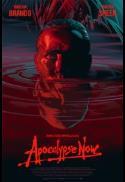
Apocalypse Now Final Cut
Rfor disturbing violent images, language, sexual content and some drug use
Francis Ford Coppola’s Apocalypse Now in its 40th year presents a new, never-before-seen restored version of the film. The new film Apocalypse Now Final Cut, has been remastered in 4K Ultra HD.
Apocalypse Now Final Cut employs a ground-breaking sound system engineered to create a truly visceral experience. In addition, the film has been enhanced with High Dynamic Range HDR, delivering spectacular colors and highlights, with brighter brights and darker-dark the result is breathtaking realism.
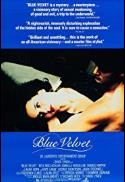
BLUE VELVET
The discovery of a severed human ear in a field leads a curious college student into a perverse, shocking netherworld of sex and violence far removed from the picture-perfect surface trappings of his seemingly placid small town. David Lynch supervised both the 4K image restoration and the 5.1 digital surround soundtrack of his horror-noir classic. With Kyle MacLachlan, Laura Dern, Isabella Rossellini, and Dennis Hopper. Adults only!
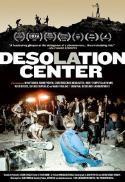
Desolation Center
Desolation Center is the previously untold story of a series of early 80s guerrilla music and art performance happenings in Southern California that are recognized to have paved the way for Burning Man, Lollapalooza and Coachella, collective experiences that have become key elements of popular culture in the 21st century. The feature documentary splices interviews and rare performance footage of Sonic Youth, Minutemen, Meat Puppets, Swans, Redd Kross, Einstürzende Neubauten, Survival Research Laboratories, Savage Republic and more, documenting a time when pushing the boundaries of music, art, and performance felt almost like an unspoken obligation.
Directed by Stuart Swezey, the creator and principal organizer of these unique events,
Desolation Center demonstrates how the risky, and at times even reckless, actions of a few outsiders can unintentionally lead to seismic cultural shifts. Combining Swezey’s exclusive access to never-before-seen archival video, live audio recordings, and stills woven together with new cinematically shot interviews, verité footage and animated sequences, Desolation Center captures the spirit of the turbulent times from which these events emerged.
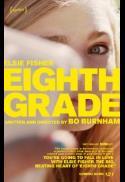
Eighth Grade
Rfor language and some sexual material
A teenager tries to survive the last week of her disastrous eighth-grade year before leaving to start high school.
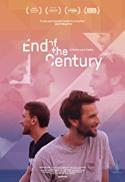
End of the Century
Two men meet in Barcelona and after spending a day together they realize that they have already met twenty years ago.

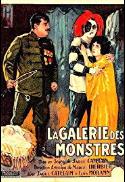
GALLERY OF MONSTERS - Alloy Orchestra accompanies
The Alloy Orchestra’s newest score is for a forgotten but recently unearthed and restored silent melodrama produced (and perhaps co-directed) by visionary French filmmaker Marcel L’Herbier (L’Inhumaine). Anticipating Tod Browning’s Freaks by eight years, this visually dazzling movie follows a young couple who run away to join the circus, only to run afoul of the cruel and despotic owner when the wife refuses his advances. Fortunately, the circus’ fiercely loyal sideshow attractions (the “freaks”) take the couple’s side in this destructive labor dispute. The Alloy Orchestra’s score was commissioned by Indiana University Cinema and the Indiana University Office of the Bicentennial
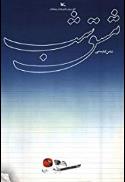
HOMEWORK
Made between two of his greatest features, Where Is the Friend’s House? and Close-Up, Abbas Kiarostami’s nonfiction movie was sparked by his own son’s scholastic problems. He interviews Iranian first- and second-graders about their homework load (a problem compounded by illiterate parents) and also their school’s emphasis on punishment rather than encouragement. The result is lyrical, moving, and quietly radical.
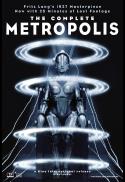
METROPOLIS - accompanied by The Alloy Orchestra
Roger Ebert called Boston’s Alloy Orchestra “the best in the world at accompanying silent films.” Tonight this internationally known trio of musicians—Terry Donahue, Roger Miller, Ken Winokur—perform their signature score, lending their distinctive mix of clarinet, accordion, electronics, and junk metal percussion to Fritz Lang’s visionary sci-fi spectacle. It’s been six years since the Alloy performed in Cleveland, and tonight marks the band’s first appearance in our new Peter B. Lewis Theater. We will show the 2010 restoration of Lang’s futuristic epic, which is 25 minutes (and 25%) longer than the previous “complete” version of the movie. Set in a gleaming futuristic city where the wealthy lead aboveground lives of luxury while worker drones toil on massive machines underground, Metropolis chronicles a robot-led revolt that threatens both classes. Thrilling, visually staggering, and prophetic, Metropolis is made even more memorable by the Alloy Orchestra’s electrifying score!
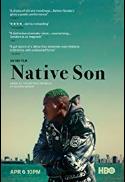
NATIVE SON
Set in contemporary Chicago but largely shot in Cleveland last year, the film directorial debut of celebrated visual artist Rashid Johnson is an adaptation of Richard Wright’s seminal 1940 novel about the black experience in America. Ashton Sanders (Moonlight) plays Bigger Thomas, a young African American man from the inner city who takes a job as live-in chauffeur for a wealthy white businessman, thus experiencing a seductive new world of money and power and entering into a precarious relationship with his boss’s daughter (Margaret Qualley of Once Upon a Time…in Hollywood ). Johnson’s movie resonates with his visual art, including sculptural works like Shea Wall (1970/2017), shown in the Museum of Contemporary Art (moCa) Cleveland's 2017 exhibition, A Poet*hical Wager. With KiKi Layne (If Beale Street Could Talk); screenplay by Pulitzer Prize-winning playwright Suzan-Lori Parks. Cleveland theatrical premiere. DCP. 104 min. Admission free but tickets required and donations accepted (suggested donation $10-$7). Screening courtesy of HBO (special thanks to Chad Martinez) and co-presented by moCa Cleveland (special thanks to Megan Lykins Reich). An audience discussion will follow the screening.
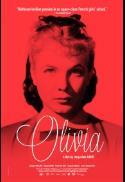
Olivia
Olivia, an English teenager, arrives at a finishing school in France. The majority of the pupils in the school are divided into two camps: those that are devoted to the headmistress, Mlle Julie and those who follow Mlle Cara, an emotionally manipulative invalid who is obsessed with Mlle Julie.
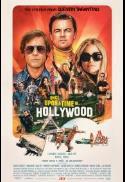
Once Upon a Time in... Hollywood
Rfor language throughout, some strong graphic violence, drug use, and sexual references.
Quentin Tarantino’s Once Upon a Time in… Hollywood visits 1969 Los Angeles, where everything is changing, as TV star Rick Dalton (Leonardo DiCaprio) and his longtime stunt double Cliff Booth (Brad Pitt) make their way around an industry they hardly recognize anymore. The ninth film from the writer-director features a large ensemble cast and multiple storylines in a tribute to the final moments of Hollywood’s golden age.
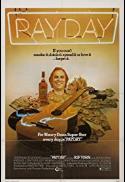
PAYDAY
The late renegade thespian Rip Torn gives perhaps his greatest screen performance in this authentically raw, rarely revived music-movie classic. Torn plays a low-wattage country-western star (and all-around brash bastard) who recklessly overindulges in drink, drugs, and dames while touring the rural South in a big Cadillac. Torn even does his own singing. “A brilliant, nasty little chrome-plated razor blade of a movie…A ‘road picture’ that is not, for once, a sentimental odyssey, but rather a clear-eyed study of people whose lives are linked to the road, how they behave and what becomes of them.” –NY Times.
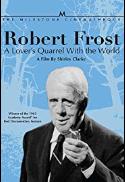
ROBERT FROST: A LOVER’S QUARREL WITH THE WORLD
Winner of the 1964 Academy Award for Best Documentary Feature, Shirley Clarke’s portrait film captures the four-time Pulitzer Prize winning poet at home in Vermont, reading at Eastern colleges, and receiving the Congressional Gold Medal from President Kennedy. Preceded at 5:00 by three experimental short films by Clarke, made before her influential indie features The Connection and Portrait of Jason: two versions of her abstract expressionist Bridges-Go-Round (1959), one with a soundtrack of electronic music, one with a jazz score; and her Oscar-nominated Skyscraper (1959), about the construction of Manhattan’s 666 Fifth Avenue building.
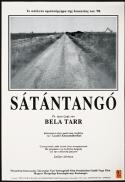
SÁTÁNTANGÓ (Part 1)
25 years after it debuted, Béla Tarr’s seven-hour Hungarian epic is finally being acknowledged as what we long thought it was: one of the great, essential movies. (In 2012, it was voted the 36th best movie of all time in an international poll of film professionals conducted by Sight & Sound magazine.) But because Sátántangó was never widely distributed in the U.S., opportunities to see it have been rare. That’s why this 25th anniversary restoration and re-release is a major event. Set in a squalid, desolate rural village in late 20th-century Hungary (after the fall of Communism), this bleakly beautiful film focuses on a group of desperate, destitute, hard-drinking members of a defunct agricultural collective who dream of prosperity and escape from their drab, dead-end lives. So when deliverance comes in the form of a young (but suspect) messiah who promises to lead them to a better place, they pack up and follow him. Sátántangó (the title translates as Satan’s Tango, and the film’s 12 chapters mirror the structure of the tango—six steps forward, six steps back) is at once a monumental black comedy; a metaphysical allegory; a menacing mystery with an interlocking jigsaw structure; and a technical tour-de-force with virtuoso long takes, indelible sound effects, and an unshakeable mood of foreboding. It is not to be missed. “One of the great, largely unseeable movies.” –J. Hoberman. “Enthralling for every minute of its seven hours.” –Susan Sontag. “My favorite film of the 90s.” –Jonathan Rosenbaum.
SÁTÁNTANGÓ (Part 2)
25 years after it debuted, Béla Tarr’s seven-hour Hungarian epic is finally being acknowledged as what we long thought it was: one of the great, essential movies. (In 2012, it was voted the 36th best movie of all time in an international poll of film professionals conducted by Sight & Sound magazine.) But because Sátántangó was never widely distributed in the U.S., opportunities to see it have been rare. That’s why this 25th anniversary restoration and re-release is a major event. Set in a squalid, desolate rural village in late 20th-century Hungary (after the fall of Communism), this bleakly beautiful film focuses on a group of desperate, destitute, hard-drinking members of a defunct agricultural collective who dream of prosperity and escape from their drab, dead-end lives. So when deliverance comes in the form of a young (but suspect) messiah who promises to lead them to a better place, they pack up and follow him. Sátántangó (the title translates as Satan’s Tango, and the film’s 12 chapters mirror the structure of the tango—six steps forward, six steps back) is at once a monumental black comedy; a metaphysical allegory; a menacing mystery with an interlocking jigsaw structure; and a technical tour-de-force with virtuoso long takes, indelible sound effects, and an unshakeable mood of foreboding. It is not to be missed. “One of the great, largely unseeable movies.” –J. Hoberman. “Enthralling for every minute of its seven hours.” –Susan Sontag. “My favorite film of the 90s.” –Jonathan Rosenbaum.
SÁTÁNTANGÓ (Part 3)
25 years after it debuted, Béla Tarr’s seven-hour Hungarian epic is finally being acknowledged as what we long thought it was: one of the great, essential movies. (In 2012, it was voted the 36th best movie of all time in an international poll of film professionals conducted by Sight & Sound magazine.) But because Sátántangó was never widely distributed in the U.S., opportunities to see it have been rare. That’s why this 25th anniversary restoration and re-release is a major event. Set in a squalid, desolate rural village in late 20th-century Hungary (after the fall of Communism), this bleakly beautiful film focuses on a group of desperate, destitute, hard-drinking members of a defunct agricultural collective who dream of prosperity and escape from their drab, dead-end lives. So when deliverance comes in the form of a young (but suspect) messiah who promises to lead them to a better place, they pack up and follow him. Sátántangó (the title translates as Satan’s Tango, and the film’s 12 chapters mirror the structure of the tango—six steps forward, six steps back) is at once a monumental black comedy; a metaphysical allegory; a menacing mystery with an interlocking jigsaw structure; and a technical tour-de-force with virtuoso long takes, indelible sound effects, and an unshakeable mood of foreboding. It is not to be missed. “One of the great, largely unseeable movies.” –J. Hoberman. “Enthralling for every minute of its seven hours.” –Susan Sontag. “My favorite film of the 90s.” –Jonathan Rosenbaum.
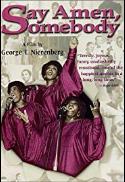
Say Amen, Somebody!
This rousing celebration of American gospel music captures Thomas A. Dorsey and Willie Mae Ford Smith (the “father” and “mother” of black gospel music) when they were alive and active, as well as a few of their notable disciples (the Barrett Sisters, the O’Neal Twins, et al.) in stirring performances. “One of the most joyful movies I’ve ever seen!” –Roger Ebert.
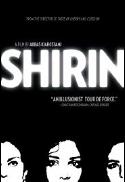
SHIRIN
In Abbas Kiarostami’s unique study of spectatorship, the expressive faces of over 100 prominent Iranian actresses (and France’s Juliette Binoche) react to a narrated film based on the 800-year-old Persian love story of Princess Shirin. Or so it seems. In reality, Kiarostami shot the actresses as they peered at a piece of cardboard and followed his instructions to recall past loves and emote. He later married their expressions to the non-existent movie we hear but never see. “[Recalls] the aesthetic and emotional candor of Dreyer’s The Passion of Joan of Arc.” –Time Out Film Guide.
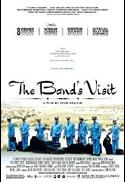
The Band's Visit
Sasson Gabay, who won the 2015 European Film Award for Best Actor for his wry performance in this delightful Israeli comedy (he also starred in the Tony Award-winning Broadway musical based on the movie and is currently on tour with the production, which plays at Playhouse Square 11/5-24), will appear in person at this screening of the original movie. He will answer audience questions after the show, and so will his son, Adam, who also acts in the play. The Band’s Visit follows an Egyptian police band as it visits Israel but gets lost on the way to its gig. The eight stranded musicians, all men, are forced to spend the night in a small, remote desert town that has no hotels but does boast a café run by a sexy, hospitable divorcée (the late, great Ronit Elkabetz). As a movie, The Band’s Visit garnered universal acclaim and won eight Ophir Awards (Israel’s Oscars), including Best Picture, Director, Actor, Actress, and Screenplay. The musical took home 10 Tony Awards, including Best Musical, Book, Score, Actor, Actress, and Director. Subtitles. 87 min.
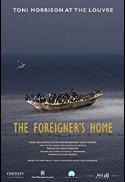
The Foreigner's Home
In 2006, novelist Toni Morrison guest-curated an exhibition at the Louvre, “The Foreigner’s Home,” that dealt with cultural and social displacement. As part of the show, Morrison engaged in public conversations with visual artists about the idea of “foreignness.” This recent movie by two Oberlin filmmakers combines video footage of that historic show in Paris with new footage of Morrison shot in the U.S. Archival film clips, photographs, music, and animation further amplify the film’s discussion of race, identity, refugees, and the redemptive power of art. Co-directors Rian Brown and Geoff Pingree will answer audience questions after the screening. DCP. 57 min. www.theforeignershome.com
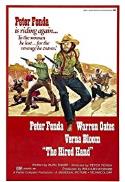
The Hired Hand
Peter Fonda followed Easy Rider by starring in (and directing, for the first time) this lyrical, low-key Western that co-stars Warren Oates and Verna Bloom. Fonda plays a man who returns to his abandoned wife and homestead after drifting around the American Southwest for seven years. Though his spouse won’t take him back, she does agree to give him work. Largely panned and virtually unreleased in 1971, Fonda’s “feminist,” “hippie” oater (of which he was very proud) eaned rave reviews when re-released 30 years later. The color cinematography (by the great Vilmos Zsigmond) should look great in this original IB Technicolor print from the Universal Pictures studio archive. “A masterpiece...One of the enduring masterpieces of 1970s American cinema.” –Bilge Ebiri, New York Magazine (8/19/19).
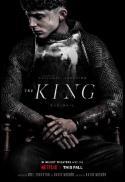
The King
Rfor some strong violence, and language.
Hal (Timothée Chalamet), wayward prince and reluctant heir to the English throne, has turned his back on royal life and is living among the people. But when his tyrannical father dies, Hal is crowned King Henry V and is forced to embrace the life he had previously tried to escape. Now the young king must navigate the palace politics, chaos and war his father left behind, and the emotional strings of his past life - including his relationship with his closest friend and mentor, the aging alcoholic knight, John Falstaff (Joel Edgerton).
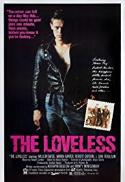
The Loveless
Decades before he became president of the Cleveland Institute of Art, Grafton Nunes was a film producer who oversaw The Loveless, the first feature by female trailblazer (and future Oscar winner) Kathryn Bigelow (The Hurt Locker). Nunes introduces and discusses a brand new restoration of that film (co-directed by Monty Montgomery) which also boasted the screen debut of Willem Dafoe. The Loveless is a motorcycle movie set during the 1950s, about bikers who wreak havoc in a small Southern town. Erotic, stylized, and painterly, the film evokes both the work of Edward Hopper and Marlon Brando’s The Wild One. With Robert Gordon (who also did the music). “One of the most original American independents in years…A cool and stylish dream of sexual self-destruction.” –Time Out Film Guide. A new 15-min. short film, U.S. 17: Shooting The Loveless, will follow the feature, and Nunes will answer audience questions after that. Cleveland revival premiere. DCP/Blu-ray. Total approx. 120 min.
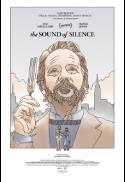
The Sound of Silence
A successful "house tuner" in New York City, who calibrates the sound in people's homes in order to adjust their moods, meets a client with a problem he can't solve.
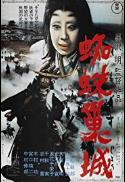
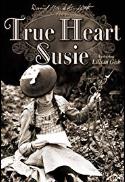
True Heart Susie
After an absence of decades, internationally known silent film accompanist Dennis James returns to the Cinematheque! James, whom Stephen Salmons, founding artistic director of the San Francisco Silent Film Festival, calls “without doubt the greatest practitioner of the art of solo silent film accompaniment” and “a national treasure," will provide live electronic keyboard accompaniment to a century-old classic by the great D.W. Griffith. Much quieter and more low key than other Griffith triumphs (Intolerance, Broken Blossoms, Way Down East), True Heart Susie is a pastoral romance starring Ohio’s own Lillian Gish. She plays an earnest farm girl who surreptitiously finances the college education of her secret crush. But after he gets his degree, he cluelessly jilts her. Those who know this forgotten gem regard it as one of Griffith’s greatest works, and James’ music should make it even more memorable. Color-toned DVD.